

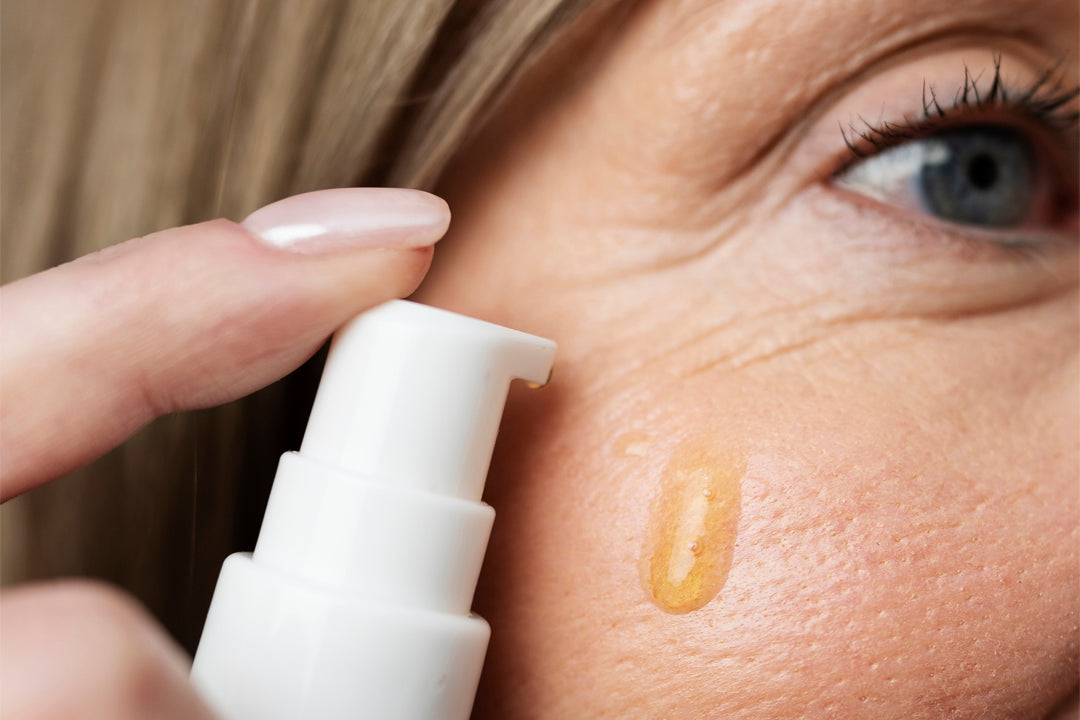
Ceramides: what they are, how they work, and why your skin (really) needs them
What are ceramides?
Ceramides are lipids (
These molecules are organized into lamellae (layers) between "dead" cells (corneocytes), creating an impermeable wall that:
-
Prevents water loss (↓ TEWL, transepidermal water loss).
-
Blocks irritants and allergens, maintaining a stable barrier.
-
Modulates desquamation and softness (corneal homeostasis).
Healthy skin has a repertoire of ceramides (CER NS/NP/EOS/AP, etc.). Among these, acyl-ceramides (e.g., CER EOS, with essential linoleic acid) are critical for the barrier's ultra-structure.
How they are produced and why they become altered
Skin ceramides are formed from glucosylceramides and sphingo
They are reduced or "imbalanced" when there is:
-
Atopy/rosacea and dermatoses with a fragile barrier.
-
Photoaging (UV), cold/dry climates, heating.
-
Intensive use of surfactants or excessive exfoliation.
-
Chronological aging (↓ endogenous synthesis).
Result: more dehydration, tightness, hyper
Topical ceramides: what they really do
Applied in cream/serum, ceramides:
-
Fill in the "gaps" in the intercellular cement → ↓ TEWL, ↑ sustained hydration.
-
Restore barrier function, reducing redness and irritabil
ity . -
Improve smoothness and visual elasticity (less desquamation).
-
Increase tolerance to potent active ingredients (retinoids, AHA/BHA) when used in compensatory protocols.
Formulation key: they work best when combined with cholesterol and fatty acids in biomimetic ratios (equimolar or 3:1:1 depending on technology) and in multilamellar structures (MLE) that mimic the skin.
Types you will see in INCI (and what they mean)
-
Ceramide NP/NS/AP/EOP/EOS: different bases and chain lengths; EOS (acyl-ceramides) are critical for the barrier.
-
Phytosphingosine / Sphingosine
: bases that also possess calming/ mild antimicrobial activity. -
Pseudoceramides: synthetic analogs with similar behavior at a lower cost.
-
Precursors (niacinamide): stimulate endogenous synthesis of ceramides in the medium term.
Who are they especially useful for?
-
Dry/dehydrated skin (winter, dry climates, airplane travel).
-
Sensitive/rosacea/atopic skin (
compromised barrier). -
Protocols with retinoids or acids (to mitigate irritation).
-
Photo-damage and aging (
barrier support + comfort). -
Post-procedure (consult your professional).
Advantages over "just moisturizing"
A humectant (e.g., hyaluronic acid) attracts water, but if the barrier is damaged, it is lost. Ceramides, on the other hand, rebuild the lipid wall, thus retaining that hydration and reducing reactivity.
Translation: less tightness, more comfort, and more stable results over time.
Quick FAQ
Can they make skin oily?
No, if the formula is well-balanced. They are biomimetic lipids, compatible with combination/sensitive skin.
Do they irritate?
Rarely. They usually improve tolerance; avoid fragrances/alcohols if your skin reacts.
Do they work alone?
Yes, but they perform better with cholesterol + fatty acids and a consistent routine (gentle cleansing + SPF).
Conclusion
Ceramides are not a "fad"; they are skin architecture. Replenishing them topically—in biomimetic formulas and alongside cholesterol/fatty acids—restores the barrier, decreases water loss, calms sensitivity, and makes the rest of your active ingredients work better.
If you are looking for immediate comfort and long-term resilience, they are the smartest starting point.


%20formed%20by%20a%20sphingoid%20base%20(e.g.,%20sphingosine%20or%20phytosphingosine)%20linked%20to%20a%20fatty%20acid.%20In%20the%20stratum%20corneum%E2%80%94the%20outermost%20layer%20of%20the...)