How to combine glycolic acid with vitamin C?
Two skin-transforming actives: glycolic acid and vitamin C. They are powerful, highly effective, but can also cause problems if not used judiciously. In this episode, we explain what they do, how to use them together—without irritation—and practical routines based on your skin type.
What does each one do? — a simple explanation
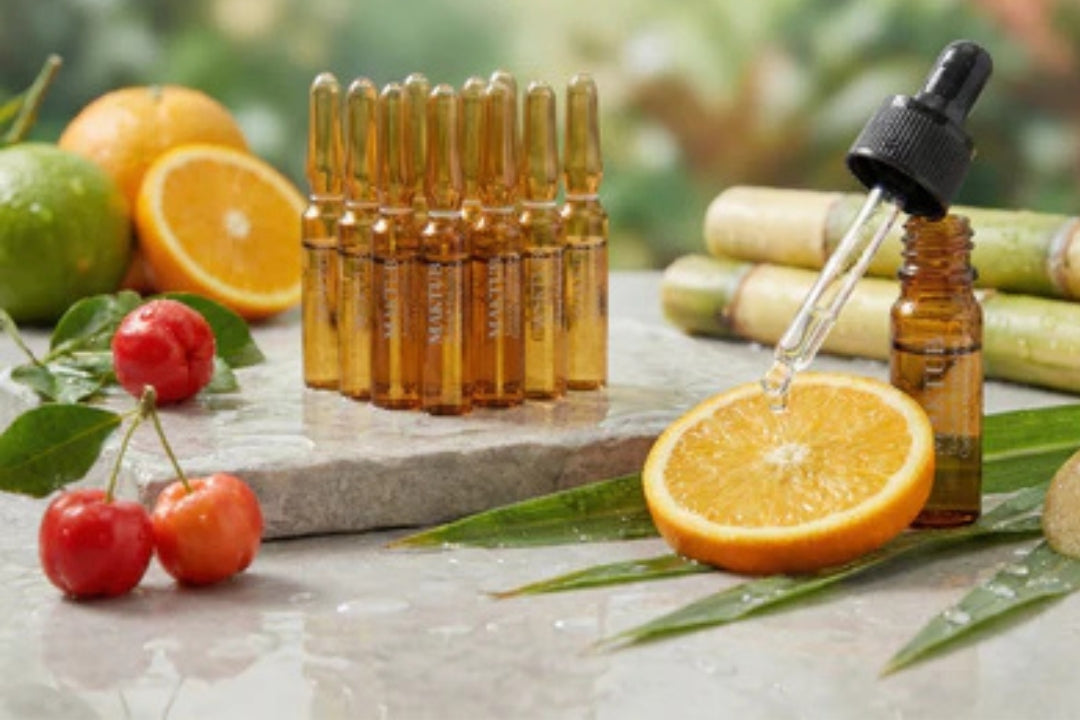
First, vitamin C. We're talking about ascorbic acid or its derivatives. It is a powerful antioxidant: it protects against free radicals, helps reduce dark spots, and brightens the skin. It also stimulates collagen production, contributing to firmer skin. In cosmetics, it is typically used in concentrations of 10 to 20% for active ascorbic acid; derivative forms can be used in different percentages and are usually more stable.
Now for glycolic acid. It is an alpha-hydroxy acid (AHA) with a low molecular weight, which allows it to penetrate the skin well. Its main function is chemical exfoliation: it dissolves the "glue" between dead cells, improves texture, lightens superficial spots, and reduces the appearance of pores. For home use cosmetics, it is best to use it at around 5–10%; at higher concentrations, we are talking about professional peels.
Can they be combined? — the truth about pH and irritation
Short answer: yes, they can be combined, but with caution. Two key points:
-
pH and activity: Vitamin C (ascorbic acid) works best at an acidic pH, and glycolic acid is also acidic. They don't "cancel each other out," but applying two powerful acids together increases the likelihood of irritation.
-
Irritation: Glycolic exfoliation can increase the penetration of other actives, which is good if you want more efficacy, but it can also increase sensitivity.
That's why there are two safe strategies: separating them by time of day or layering with a wait time.
Strategy A: separate them by time of day (recommended)
The safest way, especially if you have sensitive skin or are just starting:
-
Morning: vitamin C + sunscreen. Vitamin C enhances antioxidant protection and works great with SPF.
-
Night: glycolic acid. Apply it at night so it can work while your skin regenerates.
Advantage: you minimize irritation and use each active at its ideal time.
Strategy B: layering in the same routine (advanced level)
If you already tolerate acids and want to boost results:
-
Cleanse and dry your skin.
-
Apply glycolic acid first.
-
Wait 15–30 minutes: this time allows the glycolic acid to work and the pH to stabilize.
-
Apply vitamin C.
-
Moisturize, and if it's daytime, always use SPF.
IMPORTANT: start with low concentrations and do a patch test. If you feel intense stinging or redness, space out applications or alternate days.
Practical routines by skin type
As an example:
-
Sensitive skin: Vitamin C in the morning (stable derivative or low concentration), glycolic 1–2 nights/week at low concentration.
-
Normal/combination skin: Daily Vitamin C in the morning; glycolic 2–3 nights/week at night.
-
Oily/acid-adapted skin: Vitamin C in the morning; glycolic 3–4 nights/week or alternating with other exfoliants.
-
Advanced users: Can try the layering technique, always with a 15–30 min wait and with products of proven tolerance.
And a reminder: if you use retinoids, alternate days.
How to choose products (practical)
-
Vitamin C: pure ascorbic acid is very effective but unstable; look for opaque, airless packaging. If you want less risk of irritation, derivatives (sodium ascorbyl phosphate, ascorbyl glucoside) are more stable and gentler.
-
Glycolic acid: for home use, 5–10% is effective and safe if used in moderation. For professional peels, leave that to experts.
-
Texture and pH: don't obsess over pH, but do over tolerance. Start with well-formulated products and low concentration if in doubt.
Common mistakes and solutions
-
Mistake: thinking "more concentration = better" → solution: start low and increase.
-
Mistake: not using sunscreen → solution: daily SPF is mandatory when using glycolic acid.
-
Mistake: mixing many potent actives at once → solution: simplify your routine and add one new active every 2–4 weeks.
-
Myth: that vitamin C and glycolic acid "cancel each other out" → clarification: they don't cancel each other out, but their combination can increase irritation due to pH and exfoliation.
Final tips and safety
-
Always do a patch test (48 hours).
-
If your skin is persistently red or itchy, reduce frequency or consult a dermatologist.
-
Protect your skin with SPF every day.
-
If in doubt, alternate: vitamin C in the morning, glycolic at night, and gradually increase as tolerated.
-
And remember, care for your skin wisely and always protect your barrier. Until next time!
-