Dermocosmetics vs. Korean Cosmetics: Science of Correction or Art of Prevention?
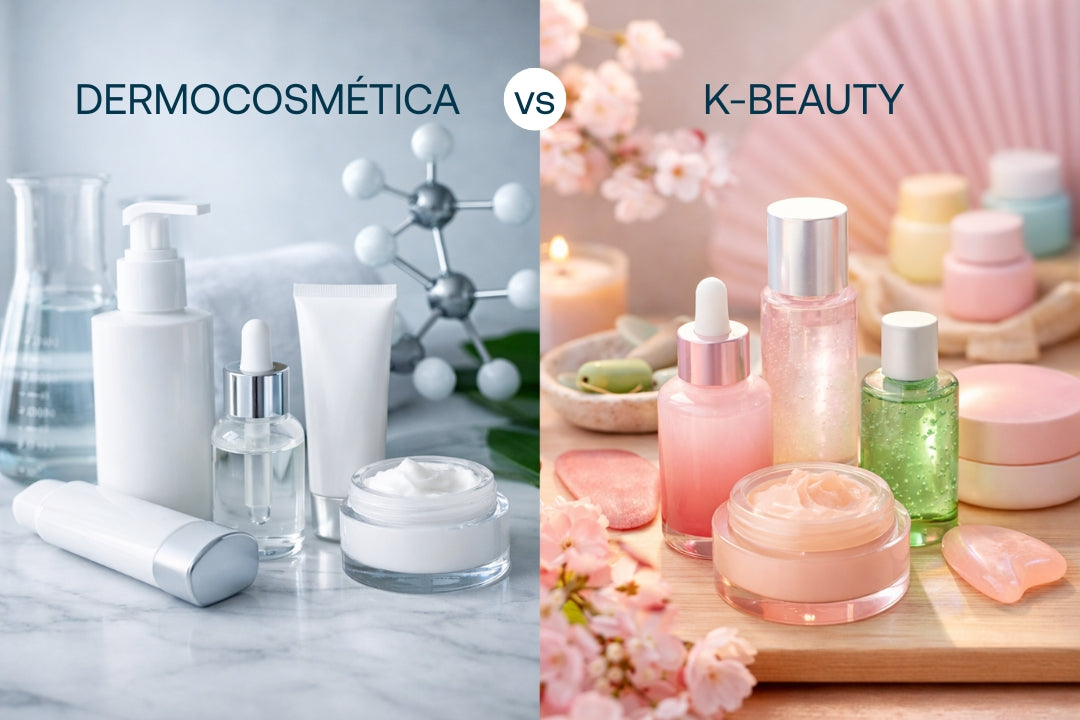
In the world of skincare, sometimes it seems like we have to choose a side. On one hand, the clinical sobriety of European and American dermocosmetics; on the other, the sensory innovation and ritual of Korean cosmetics (K-Beauty). I'll tell you that the key is not which one is better, but what "language" each one speaks to your skin.
Here, I'll break down the real differences for you.
1. Dermocosmetics: The Scalpel in a Jar
Dermocosmetics originated from pharmacy and medicine. Its main objective is to correct and treat specific conditions (acne, rosacea, blemishes, severe aging).
-
Star Actives: Focuses on ingredients with decades of clinical backing: Retinol, pure Vitamin C, Glycolic Acid, or Niacinamide in high concentrations.
-
The Formulation: Here we seek bioavailability. We don't care as much if the cream smells like roses or has a cloud-like texture; we care that the pH is exactly right for the active ingredient to penetrate where it should.
-
Philosophy: "Less is more." Minimalist but very potent routines. It's about cosmetics with visible short-to-medium-term results in the dermal structure.
2. Korean Cosmetics: The Culture of Resilience
For Korea, skin is not "fixed," it is cultivated. Its approach is purely preventive and obsessively focuses on the skin barrier and deep hydration.
-
Star Actives: Natural ingredients, often fermented to improve their absorption, such as Snail Mucin, Centella Asiatica (Cica), Ginseng, or Rice.
-
The Formulation: They are masters of texture and sensoriality. Light layers (layering) that allow many products to be applied without oversaturating the skin. They constantly innovate in formats (patches, cushions, essences).
-
Philosophy: "Skin First." The goal is Glass Skin: skin so hydrated and healthy that it shines on its own. It's a marathon based on consistency and calm.
Key Differences: Comparative Table
| Feature | Dermocosmetics | Korean Cosmetics (K-Beauty) |
| Objective | Treat and correct problems. | Prevent and maintain health. |
| Point of sale | Pharmacies and clinics. | Specialty and beauty stores. |
| Ingredients | Synthetic, high purity and potency. | Botanical, fermented, and natural. |
| Routine | Simplified (3-4 steps). | Multi-layered (up to 10 steps). |
| Sensation | Functional, sometimes "aggressive." | Soothing, light, and pleasant. |
The Expert's Verdict: Which to Choose?
My recommendation is not to choose, but to "mix & match".
If you have active acne or are looking for a powerful anti-aging effect, dermocosmetics will be your base (a good Retinol serum or a Salicylic Acid cleanser). However, you can integrate Korean cosmetics to counteract the irritation from those strong active ingredients, using a Centella Asiatica essence or a fermented ceramide moisturizer.
Author's Note: Don't look for the product with the most ingredients; look for the one with the necessary technology to get those ingredients into your dermis.