Why your skin needs an antioxidant serum every day
The skin is the most exposed organ of the human body and, therefore, one of the most vulnerable to environmental damage. Everyday factors such as solar radiation, air pollution, tobacco smoke, or even metabolic stress generate free radicals, highly reactive molecules that can deteriorate skin cell structures.
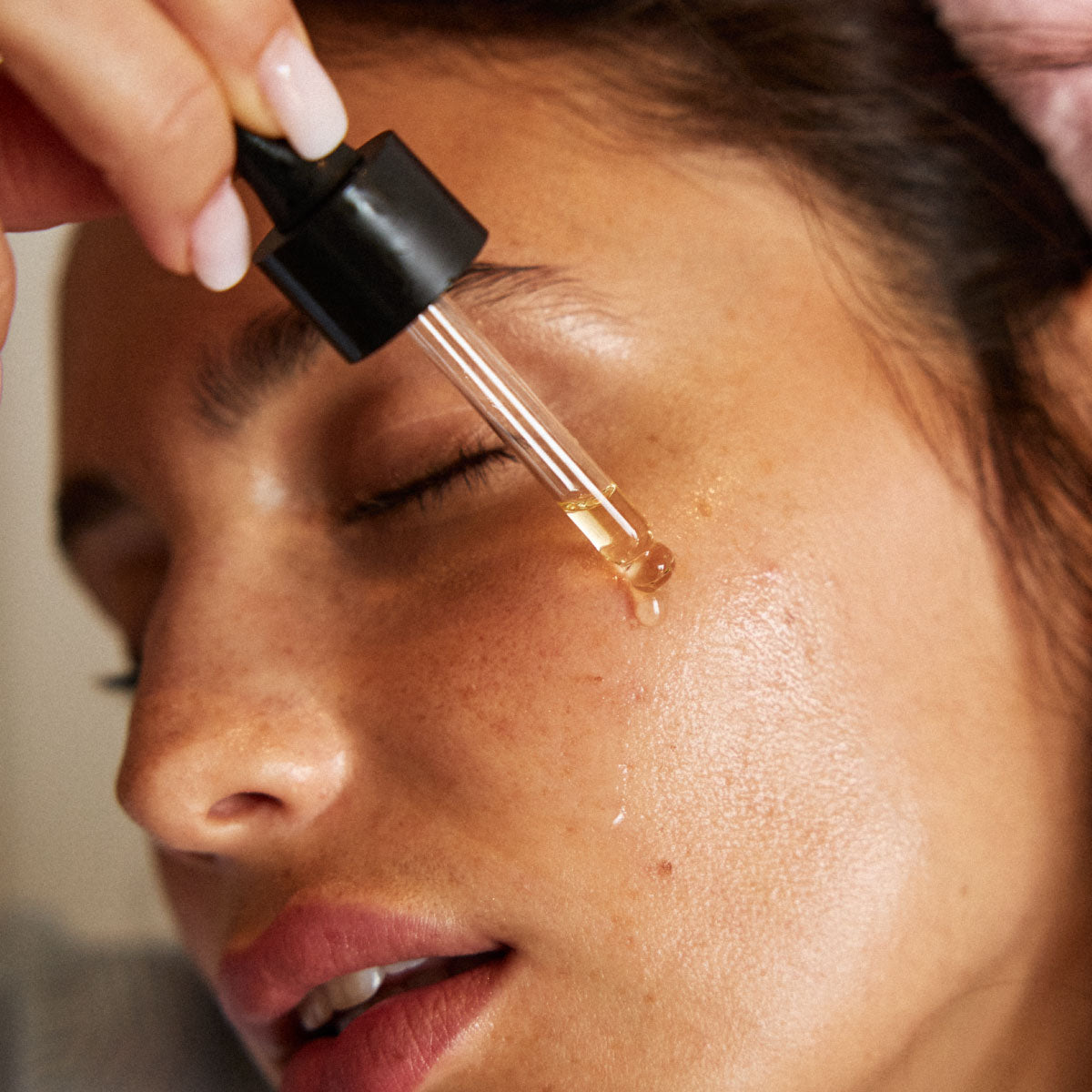
Incorporating an antioxidant serum into your daily facial care routine is one of the most effective strategies to protect the skin against this process. Understanding how antioxidants work and why the serum format is the most suitable helps to understand their essential role in preventing skin aging.
What are free radicals and how do they damage the skin?
Free radicals are unstable molecules that possess one or more unpaired electrons. This chemical instability causes them to react with other molecules in the environment to regain stability.
In the skin, these free radicals are mainly generated by:
-
Ultraviolet (UV) radiation
-
Environmental pollution (ozone, fine particles)
-
Blue light
-
Inflammatory processes
-
Metabolic oxidative stress
When they accumulate in excess, they produce oxidative stress, an imbalance between the production of free radicals and the body's ability to neutralize them.
The main consequences for the skin are:
Degradation of collagen and elastin
Free radicals activate enzymes called metalloproteinases (MMPs) that degrade the structural fibers responsible for skin firmness.
Damage to membrane lipids
They cause lipid peroxidation, altering the integrity of cell membranes.
Alteration of cellular DNA
They can cause mutations in the DNA of keratinocytes and fibroblasts.
Low-grade chronic inflammation
Oxidative stress promotes inflammatory processes that accelerate skin aging.
As a result, visible signs appear such as:
-
wrinkles
-
loss of firmness
-
spots
-
uneven texture
-
dull skin
How antioxidants work
Antioxidants are molecules capable of neutralizing free radicals without becoming unstable themselves.
Their main mechanism consists of donating an electron to the free radical to stabilize it, preventing it from attacking cellular structures.
Simply put:
Free radical + Antioxidant → stable molecule
This interrupts the oxidative chain reactions that damage skin cells.
In addition to neutralizing free radicals, many antioxidants also:
-
reduce inflammatory processes
-
stimulate collagen synthesis
-
strengthen the skin's natural antioxidant defenses
-
improve skin radiance
Why it is necessary to apply them every day
Oxidative stress in the skin is continuous and cumulative.
Every day the skin is exposed to multiple sources of free radicals:
-
solar radiation
-
urban pollution
-
visible and blue light
-
temperature changes
-
normal metabolic processes
Although the body has endogenous antioxidant systems (such as superoxide dismutase, catalase, or glutathione), these decrease with age and with environmental exposure.
Applying topical antioxidants daily helps to:
-
Strengthen the skin's natural defenses
-
Reduce accumulated oxidative damage
-
Prevent photoaging
-
Maintain skin barrier function
Numerous dermatological studies have shown that the continuous use of topical antioxidants significantly reduces markers of oxidative damage induced by UV and pollution.
Why the serum format is the most effective
Antioxidants are molecules that must effectively penetrate the epidermis to exert their protective function.
The serum format offers several key advantages:
High concentration of active ingredients
Serums contain a higher proportion of functional ingredients than a conventional cream.
Light texture and rapid absorption
Their aqueous or hydroalcoholic base facilitates the diffusion of active ingredients into the superficial layers of the skin.
Higher bioavailability
Formulations often include solvents and humectants that promote skin penetration.
Application before cream
They are applied directly to clean skin, allowing antioxidants to act more efficiently.
For these reasons, most dermatological antioxidant treatments are formulated as serums or active concentrates.
Common antioxidants in facial serums
Among the most widely used antioxidants in cosmetics are:
Vitamin C (ascorbic acid and derivatives)
A potent free radical neutralizer that also stimulates collagen synthesis and improves radiance.
Vitamin E (tocopherol)
Protects membrane lipids against oxidation.
Ferulic acid
Stabilizes other antioxidant vitamins and enhances their efficacy against UV radiation.
Plant polyphenols
Present in green tea, resveratrol, or grapes, with powerful antioxidant and anti-inflammatory activity.
Coenzyme Q10
Participates in cellular energy processes and protects against oxidative damage.
Antioxidants and sun protection: a key combination
It is important to understand that antioxidants do not replace sunscreen, but they do act in a complementary way.
While sunscreen blocks or absorbs part of UV radiation, antioxidants help neutralize the free radicals that are also generated in the skin after sun exposure.
Therefore, the ideal combination in a daily routine is:
-
Antioxidant serum
-
Moisturizer
-
Sunscreen
This approach provides comprehensive protection against environmental aging.
Oxidative stress is one of the main drivers of skin aging. Daily exposure to UV radiation, pollution, and other environmental factors generates free radicals that progressively deteriorate skin structures.
Antioxidant serums allow you to strengthen the skin's natural defenses, neutralize free radicals, and prevent cumulative damage responsible for wrinkles, spots, and loss of radiance.
Incorporating an antioxidant in serum format into your daily routine is not just a cosmetic gesture, but a scientific strategy for preventing skin aging and protecting against environmental aggressors
Incorporate an antioxidant serum into your daily routine.
At Wildraincosmetics, we have two clinically proven options:
- ILEGAL — Stable Vitamin C + DMAE + Ginkgo Biloba. 12h of continuous antioxidant protection.
- TAHITI — Ferulic Acid + Vitamin C. +30% luminosity and -40% oxidative damage in 4 weeks.